
Oral Appliance Therapy (OAT)
Oral appliance therapy is a widely accepted and effective non-CPAP treatment for many patients with obstructive sleep apnea (OSA) and snoring. Rather than using a mask and airflow, OAT uses a custom dental device that repositions the jaw or supports the airway to keep upper airway structures open during sleep.
Key features & benefits of Oral Appliance Therapy:
While OAT may not replace CPAP in every case (especially severe OSA), it is an excellent option for patients who struggle with CPAP tolerance, claustrophobia, mask leaks, or discomfort.
ProSomnus-Approved Devices
Essex Dental Sleep Center is proud to be a ProSomnus provider. Below are some examples of ProSomnus devices commonly used in clinical practice:
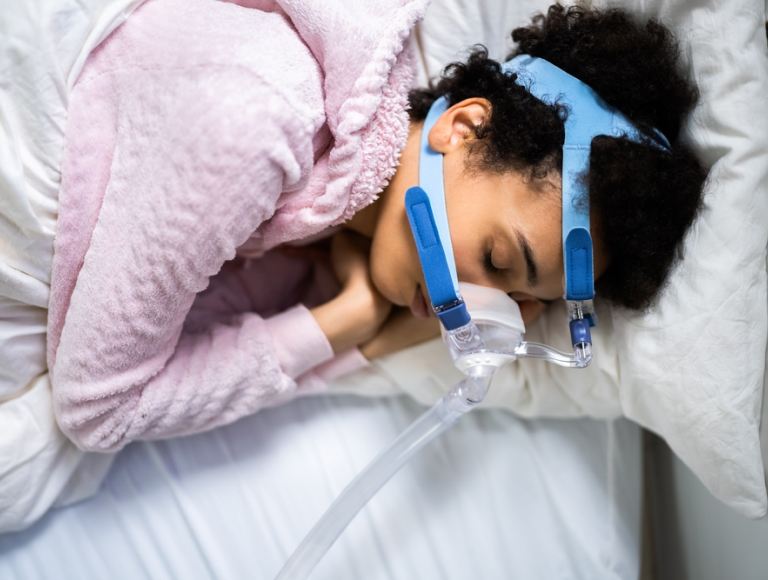
Can’t Sleep With Your CPAP? You May Have Another Option.
If you’ve been diagnosed with sleep apnea but struggle to use your CPAP every night, you’re not alone.Maybe you’ve said:
“I hate wearing the mask.”
“The mask leaks all night.”
“I can’t sleep with the hose.”
“I feel claustrophobic.”
“I travel constantly and hate carrying my CPAP.”
“I take it off while I’m sleeping without even realizing it.”
CPAP can be an effective treatment for obstructive sleep apnea. But a treatment only works when you can actually use it consistently.
At Essex Dental Sleep Center, we help patients who have been diagnosed with sleep apnea but can’t tolerate CPAP or are looking for a CPAP alternative explore another potential solution: oral appliance therapy.
CPAP Didn’t Work for Me. Now What?
For many patients, getting diagnosed with sleep apnea is only the beginning.
You may have gone through a sleep study, received a CPAP machine, tried different masks, adjusted the pressure, and genuinely attempted to make it work. But night after night, you still struggle.
Common CPAP complaints include:
An Alternative to CPAP for Sleep Apnea
For appropriate patients, oral appliance therapy can provide a more comfortable and convenient way to manage obstructive sleep apnea.
Instead of wearing a mask connected to a machine, you wear a small, custom-made oral appliance while you sleep. The appliance is designed to gently reposition your lower jaw to help maintain an open airway while you’re sleeping.
Think of it almost like a custom nightguard, but engineered specifically to help manage your airway. You simply place the appliance in your mouth before going to sleep.
No mask
No hose
No bedside machine
No electricity
Why Patients Consider Oral Appliance Therapy
One of the biggest advantages of oral appliance therapy is its simplicity. For the right patient, an oral appliance may be:
Comfortable
Quiet
Portable
Easy to use
Customizable
Something you can keep using
“But I Thought CPAP Was My Only Option.”
It isn’t necessarily.
CPAP remains an important and highly effective treatment for many people with obstructive sleep apnea. But depending on your diagnosis, medical history, anatomy, and severity of sleep apnea, your healthcare providers may determine that oral appliance therapy is an appropriate alternative.
That’s why we don’t believe the conversation should be
CPAP or nothing.
Instead, the question should be
What treatment can you successfully and consistently use?
Your CPAP Is Sitting in the Closet. Your Sleep Apnea Isn’t.
This is the part that matters.
If your CPAP is uncomfortable, it can be tempting to simply stop wearing it. But untreated obstructive sleep apnea doesn’t disappear because the machine is sitting on your nightstand.
Sleep apnea repeatedly interrupts normal breathing during sleep and can prevent you from getting the restorative sleep your body needs. That’s why finding a treatment you can actually tolerate is so important.
If you’ve already tried CPAP and it simply isn’t working for you, it may be time to explore whether another treatment option makes sense.
Could an Oral Appliance Be Right for You?
You may want to discuss oral appliance therapy if:
Already Diagnosed With Sleep Apnea?
You’ve already taken the important first step by finding out what’s happening while you sleep.
Now you need a treatment you can actually use.
At Essex Dental Sleep Center, we focus on helping appropriate patients manage sleep apnea through customized oral appliance therapy.
If CPAP didn’t work for you, that doesn’t necessarily mean you’re out of options.
Can’t Tolerate CPAP? Let’s Talk About Your Options.
Schedule a consultation with Essex Dental Sleep Center to find out whether oral appliance therapy may be appropriate for you.
No mask. No hose. A different approach to treating sleep apnea.
Who Is This Treatment For?
Oral Appliance Therapy May Be Right For You If…
It May Not Be The Best Option If…
Frequently Asked Questions
What is the best alternative to CPAP for sleep apnea?
There is no single best treatment for every patient. For appropriate patients with obstructive sleep apnea, a custom oral appliance may be considered as an alternative to CPAP. Your diagnosis, sleep apnea severity, anatomy, medical history, and other factors should be considered before choosing treatment.
What if I can’t tolerate my CPAP?
If you cannot tolerate CPAP, speak with your sleep physician or qualified sleep healthcare provider rather than simply discontinuing treatment. Depending on your individual circumstances, oral appliance therapy may be one option worth discussing.
Can an oral appliance replace my CPAP?
For some appropriately selected patients, oral appliance therapy may be used instead of CPAP. Whether it is appropriate for you depends on your individual diagnosis and treatment recommendations.
What does a sleep apnea oral appliance look like?
It is a small, custom-made device worn inside the mouth while sleeping. It is designed to position the jaw in a way that helps maintain an open airway.
Is an oral appliance easier to travel with than CPAP?
Many patients appreciate the portability of oral appliances because they are small, require no electricity, and can be stored in a compact case.
What if my CPAP mask makes me claustrophobic?
Mask-related claustrophobia is one reason some patients have difficulty consistently using CPAP. If you have been diagnosed with obstructive sleep apnea but cannot comfortably tolerate a mask, ask whether you may be a candidate for an alternative such as oral appliance therapy.
Should I stop using my CPAP before my consultation?
No. Do not discontinue prescribed CPAP therapy without discussing it with your treating healthcare provider. Your consultation is an opportunity to determine whether another treatment option may be appropriate for you.
Can an oral appliance really treat sleep apnea?
Yes — for the right patient, a custom oral appliance can genuinely treat obstructive sleep apnea (OSA). It isn’t simply a device for snoring.
Is an oral appliance better than CPAP?
If you can’t tolerate CPAP and barely use it, its real-world benefit can be much lower than the oral appliance. An oral appliance that you comfortably wear every night can therefore be more effective. The best sleep-apnea treatment is one that effectively treats your condition—and that you can actually use consistently.
Can I use an oral appliance if I have severe sleep apnea?
Yes—but severe obstructive sleep apnea (OSA) requires more caution.
An oral appliance can sometimes be used for severe OSA, particularly when a patient cannot tolerate CPAP or strongly prefers an alternative. However, CPAP/PAP therapy is generally the first-line treatment for severe OSA.
Does the appliance hurt?
Usually, a properly fitted oral appliance should not be painful, but some patients experience temporary discomfort while they get used to it.
Symptoms often improve as the patient adapts, and the appliance can usually be adjusted for comfort and effectiveness.
Will it change my bite?
You may notice a temporary change in your bite when you wake up. Our custom AM Aligner helps reset your bite each morning, while regular follow-up allows us to monitor your comfort and dental health.
How long does it last?
A quality custom oral appliance can typically last several years with proper care. Its lifespan depends on factors like wear, grinding, and how well it is maintained. We monitor your appliance during follow-up visits and can let you know when it needs to be repaired or replaced.
How do I clean it?
Just with water! No harsh chemicals, no toothpaste, no denture cleaners, no tablets.
Can I travel with it?
Yes! No need for hoses, electricity, various parts.
How long until I receive it?
It takes 2 weeks for the manufacturer to send us your device once we submit the digital impression scan of your teeth to them.
Does insurance cover it?
Many medical insurance plans provide coverage for oral appliance therapy for obstructive sleep apnea. Coverage varies by plan, so our team will verify your benefits and help you understand your estimated out-of-pocket costs before treatment begins.
Does Medicare cover it?
Yes. Our office is in network with Medicare.
What if I grind my teeth?
We’ll evaluate your bite and choose an appliance designed to work with your needs. Regular follow-up helps us monitor both your appliance and your teeth.
What if I have dentures?
You may still be a candidate for an oral appliance, depending on your individual situation. We’ll evaluate your dentures, bite, and overall oral health to determine whether an oral appliance is a safe and effective option for you.
What if I have dental implants?
Dental implants do not necessarily prevent you from using an oral appliance. We’ll evaluate your implants, bite, and overall oral health to determine the best and safest treatment option for you.
What if I don't have a sleep study?
That’s okay. If you haven’t had a sleep study, we can help determine the next step. A sleep study may be recommended to confirm a diagnosis of sleep apnea and determine the most appropriate treatment for you.
Can I use an appliance for snoring without sleep apnea?
Yes. A custom oral appliance can be an effective treatment for primary snoring when sleep apnea has been ruled out. We’ll evaluate your symptoms and help determine whether an oral appliance is right for you.
What happens if I can't tolerate the appliance?
We’ll work with you to improve comfort and make adjustments as needed. Most patients have an adjustment period, but if an oral appliance ultimately isn’t right for you, we’ll help you explore other treatment options.